Photo guide 2026
Palma Cathedral photos: the best angles, hour by hour
La Seu is the most photographed building in the Balearics, yet most visitors leave with the same washed-out midday shot. This guide maps the six vantage points that actually deliver — from the Parc de la Mar reflection to Palma Cathedral at night — with the right light for each one and the phone settings that rescue tricky exposures.
ⓘ Independent guide. Not the cathedral’s official website.The light plan, in one table
The cathedral faces south over the sea, so the main facade catches sun for most of the day — the light just shifts from flat to dramatic depending on the hour. Before walking through each spot, here is the full schedule to build your Palma day around:
| When | Vantage point | What you get |
|---|---|---|
| 10:00 (opening) | Interior, main nave | The rose window projecting colours onto the stone, before the crowds |
| Midday | Portal del Mirador | Sculpted Gothic detail under soft overhead light |
| Mid-afternoon | From the sea (boat) | The full south facade with the city walls and La Almudaina |
| Sunset | Parc de la Mar | Golden stone and the lake reflection |
| Sunset | Na Burguesa | The whole bay in one frame, cathedral at the centre |
| Blue hour | Parc de la Mar / Dalt Murada | The cathedral at night, floodlit, sky still blue |
Parc de la Mar: the reflection that opens every guidebook
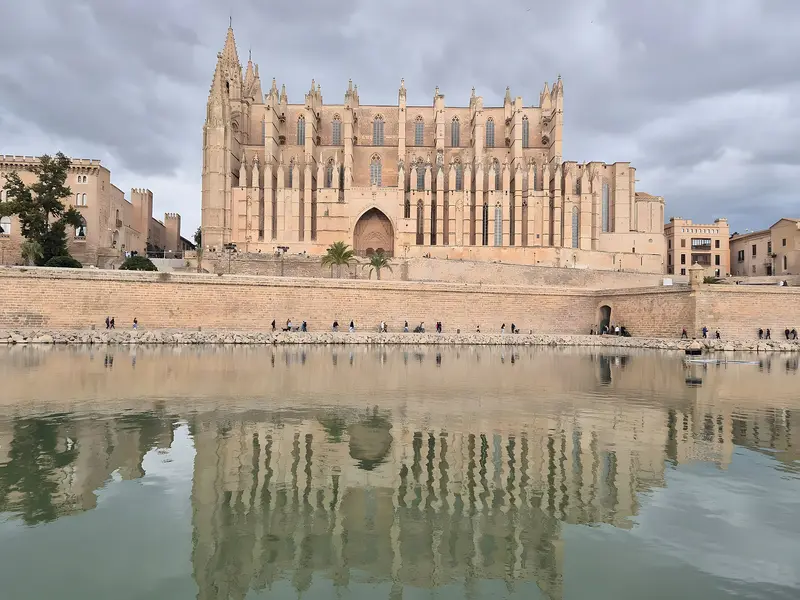
It is the classic angle for a reason: the artificial lake in Parc de la Mar lays a mirror directly beneath the south facade, doubling the whole cathedral — Renaissance sea wall included — in the water. Stand at the pool edge farthest from the building, drop the camera close to the water line and frame horizontally so both cathedral and reflection fit.
Light decides everything here. At noon the shot is correct but flat; from mid-afternoon the side light carves out the buttresses, and at sunset the Santanyí sandstone glows gold. The reflection needs still air — wind ripples the lake and the mirror vanishes. If the water won’t cooperate, climb the Dalt Murada rampart walk for a close-range study of buttresses and pinnacles instead.
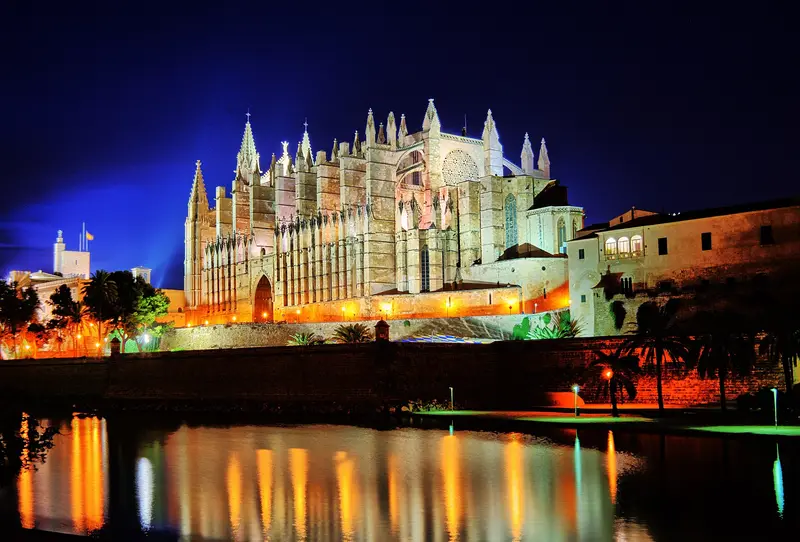
Palma Cathedral at night: aim for blue hour
Palma Cathedral at night is a separate session, not a repeat: once the floodlights come on, the facade seems to hover above the bay. The common mistake is arriving when the sky is already black. Shoot during blue hour — the 20–40 minutes after sunset — when the lit stone and the deep blue sky balance each other and nothing in the frame blows out.
- From Parc de la Mar: the night reflection in the lake — the most spectacular version of the classic.
- From the Dalt Murada: floodlit pinnacles up close, no telephoto needed.
- From the seafront promenade (the port or Portixol): the full city skyline with La Seu dominating it.
Outdoors, tripods are welcome; without one, rest your camera or phone on the pool parapet and use the timer. And in February and November the night hides an early-morning bonus: the Festival of Light, when sunrise fires straight through the great rose window.
From the sea: the angle almost nobody takes home
La Seu was built to be seen from the water — it was the first thing sailors saw entering the bay of Palma. From the sea, the south facade appears complete, lined up with the city walls and the Almudaina Palace, with no cars, cranes or cables in the way. It is the only vantage point that fits the whole ensemble in a single frame.
The practical way to get it is a boat: there is a cathedral + catamaran sailing combo that covers the entry ticket and the sea session in one booking, plus a range of boat trips around the bay at different times of day. Pick an afternoon sailing: the sun sits behind you, lighting the facade head-on.
Inside: enter at 10:00 and head straight for the rose window
The interior shot you came for is the great rose window — around 12 metres across with over 1,100 pieces of glass — working as a kaleidoscope: morning sun enters through the east window and scatters coloured light across the columns and west wall. The effect peaks in the first hour and fades towards midday, so walk in at 10:00 sharp, when doors open and the nave is still half empty.
For the full nave frame (44 metres high, columns like stone palm trees) you need a wide angle; for Miquel Barceló’s ceramic mural in the Capella del Santíssim, raise your exposure — the chapel is darker than the nave. Check the seasonal opening hours before you go, and remember last entry is 45 minutes before closing.
Two angles most visitors skip
Portal del Mirador: Gothic detail facing the sea
On the south side, the Portal del Mirador is the cathedral’s richest Gothic doorway, with sculpture from the circle of Guillem Sagrera. At midday the high sun leaves the carvings in soft shadow, so the relief photographs without harsh contrast. From April to October it also serves as the tourist entrance, so take the photo before joining the queue (in winter you enter through the Casa de l'Almoina — follow the signs at the cathedral itself).
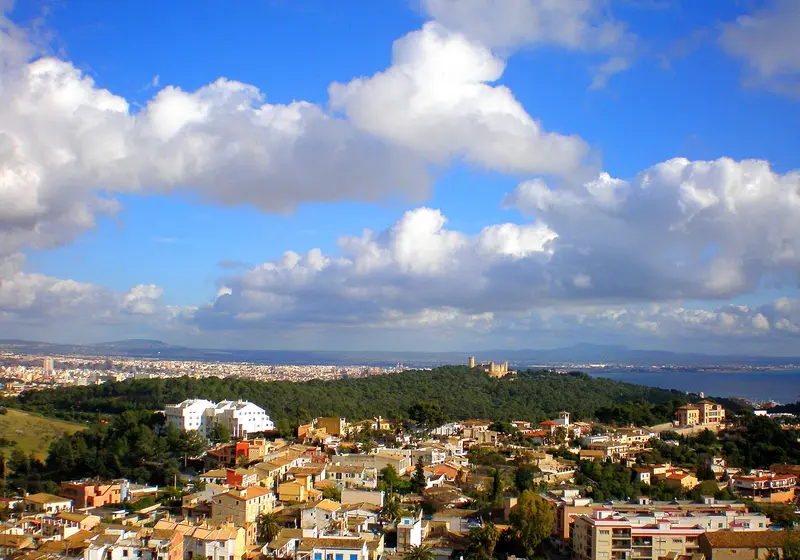
Na Burguesa: the whole bay in one frame
For the master panorama — city, port, bay and La Seu as the centrepiece — drive up to the Na Burguesa viewpoint in the hills above the Génova district. It is about 15 minutes by car or taxi from the centre; there is no convenient public transport. Go at sunset for raking light across the city, or after dark with a telephoto to compress the illuminated bay.
Photography rules inside
Phone photography: five settings that actually matter
- Wipe the lens before the night shot — pocket grease turns every streetlight into a halo.
- Night mode plus a solid rest for blue hour: a parapet, bench or backpack stands in for a tripod.
- Ultra-wide in the nave, then straighten the verticals in editing — better that than cropping off the vault.
- Expose for the stained glass if you want the rose window’s colour, or for the stone if you want the nave — a phone can’t hold both without HDR.
- Shoot RAW if your phone supports it: the dark-stone-versus-bright-glass contrast recovers well in editing.
And the one tip that has nothing to do with cameras: book a dated ticket for the first slot of the morning. The best interior light and the emptiest nave happen in the same half hour.
Palma Cathedral photography FAQ
Can you take photos inside Palma Cathedral?
Yes — the tourist ticket allows personal photography throughout the cathedral and museum. Follow the usual church etiquette: no flash, don’t photograph people at prayer, and respect signage and staff instructions. If in doubt, ask at the entrance.
Are tripods and flash allowed?
Skip both indoors: flash ruins the atmosphere for everyone, and a tripod blocks the flow of visitors — standard courtesy rules in any working church. Outdoors (Parc de la Mar, the Dalt Murada walls) tripods are fine, and they are the key to the night shot.
When is the best time to photograph Palma Cathedral at night?
Blue hour — roughly 20–40 minutes after sunset, when the floodlights are on but the sky still holds deep blue. Once the sky turns fully black, the contrast spikes and the stone blows out in your photo.
Where is the famous reflection photo taken?
At the artificial lake in Parc de la Mar, directly below the south facade. Stand at the edge of the pool farthest from the cathedral and shoot low, close to the water. It needs calm air — wind ripples kill the mirror — and sunset adds golden stone to the reflection.
Can I photograph during mass?
No. There is no tourist visiting during services, and photographing worshippers would be disrespectful; on Sundays the cathedral opens for worship only. Check the mass times page and plan your interior session Monday to Saturday.
Can I fly a drone by the cathedral?
Not freely: Palma’s city centre falls under Spain’s drone regulations, and flights over urban areas require authorisation — check ENAIRE Drones before even considering it. For an elevated view without paperwork, the Na Burguesa panorama or the shot from a boat does the job.
What lens or phone setup do I need for the interior?
A wide angle: the nave is 44 metres tall and a standard focal length simply won’t fit it. On a phone, switch to the ultra-wide lens, expose for the stone (not the windows) and brace against a column or pew for stability, since tripods aren’t an option inside.
Facts last reviewed: August 2026. Opening hours and access conditions cross-checked with the official site (catedraldemallorca.org) and Tiqets.